World Models in Focus at the WRC Main Forum. Physical Token Economics Strikes a Chord.
01 Prof. Kui Jia Appointed Inaugural Member of the CIE World Model Expert Committee
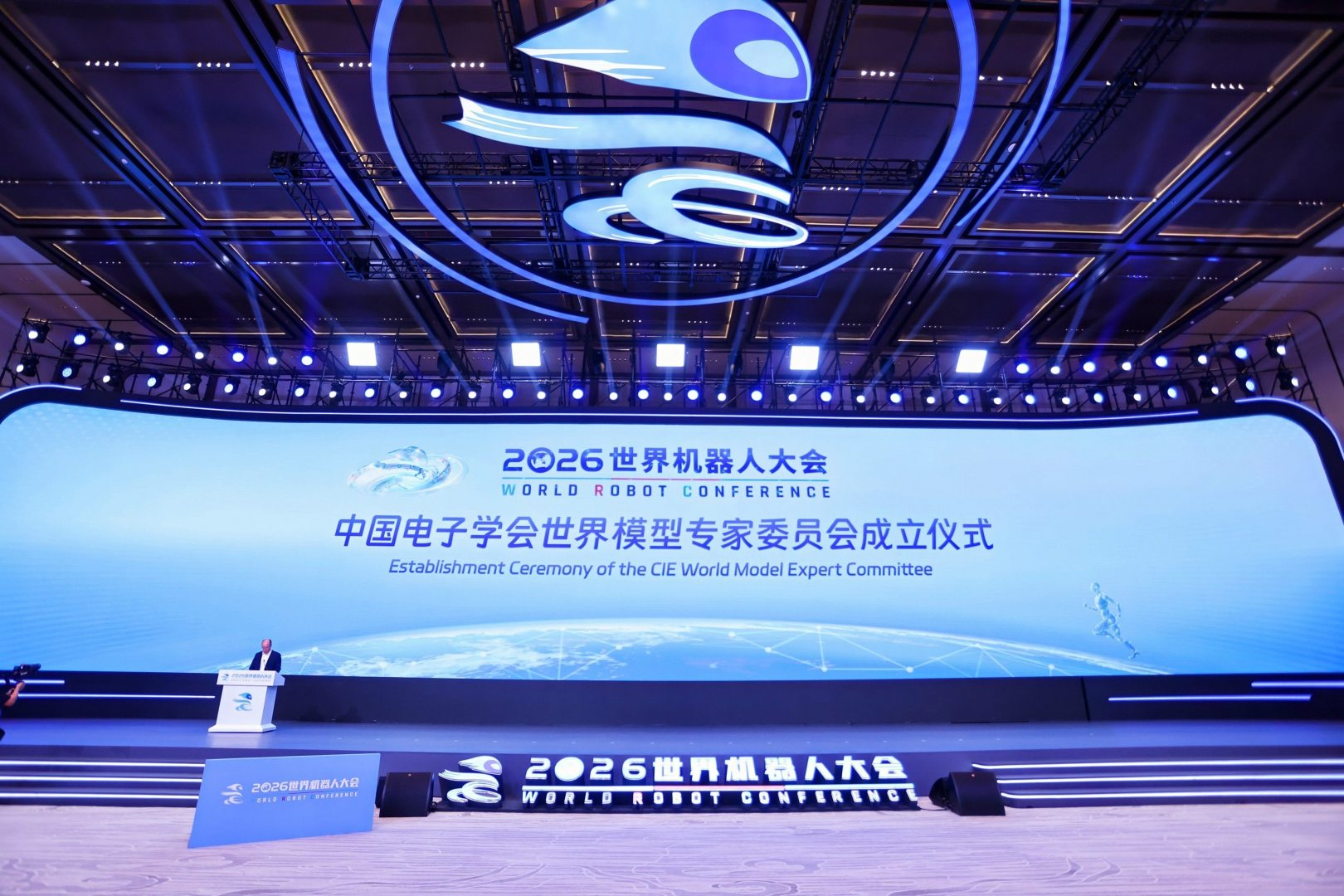
As a frontier direction of artificial intelligence, the world model is an intelligent system endowed with causal understanding of the physical world and the ability to reason about its future — the key technological foundation for robots to “understand the world” and “change the world”. To thoroughly implement the major decisions and plans of the Party and the state on promoting the high-quality development of artificial intelligence, and to earnestly act on the requirements of the “15th Five-Year Plan” outline on the forward-looking layout of future industries, on the afternoon of August 21, the Chinese Institute of Electronics (CIE) officially announced the establishment of the World Model Expert Committee (hereinafter the Expert Committee) at the 2026 World Robot Conference.
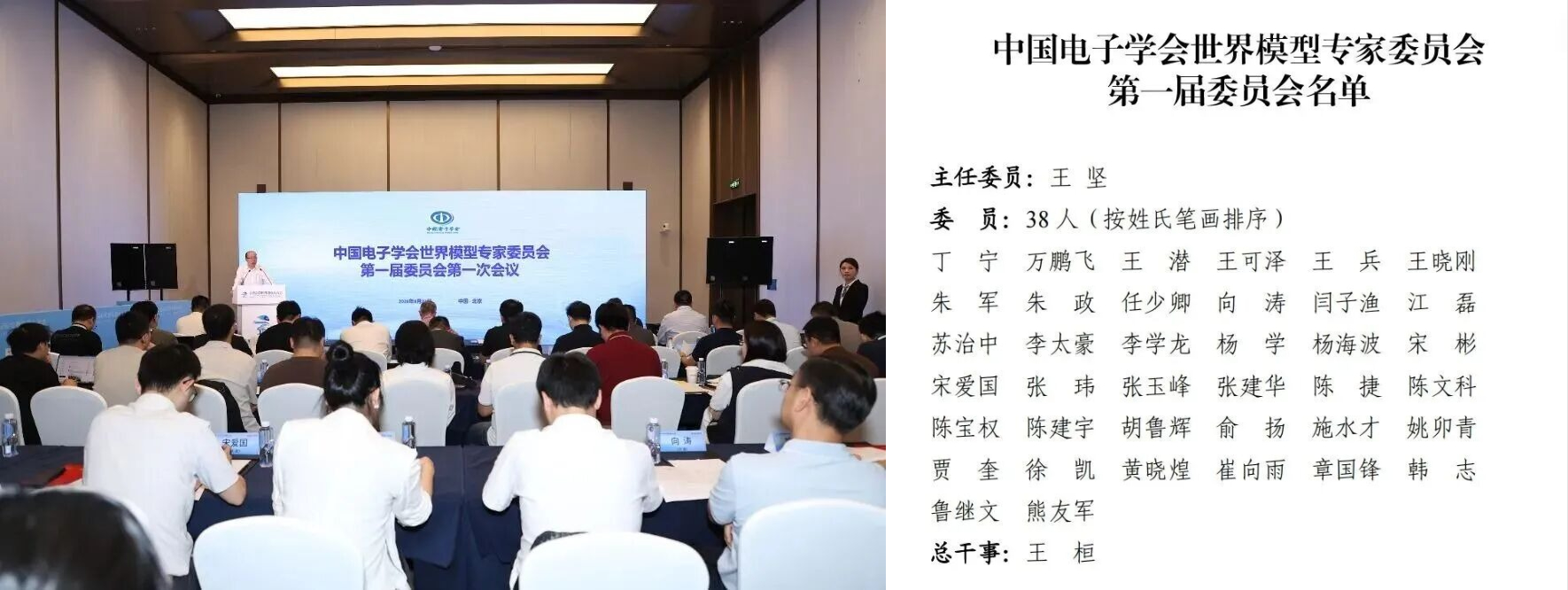
Prof. Kui Jia, founder and CEO of DexForce Technology, was appointed an inaugural member of the CIE World Model Expert Committee and attended the first closed-door meeting held after the establishment of the committee. At the meeting, Zhao Yunfeng, Vice President and Secretary-General of the CIE and Secretary of the Party Committee of its headquarters, joined Expert Committee Director Academician Wang Jian in presenting letters of appointment to the inaugural members.
02 World Models Take the WRC Main Forum Stage, and Physical Token Economics Resonates On Site
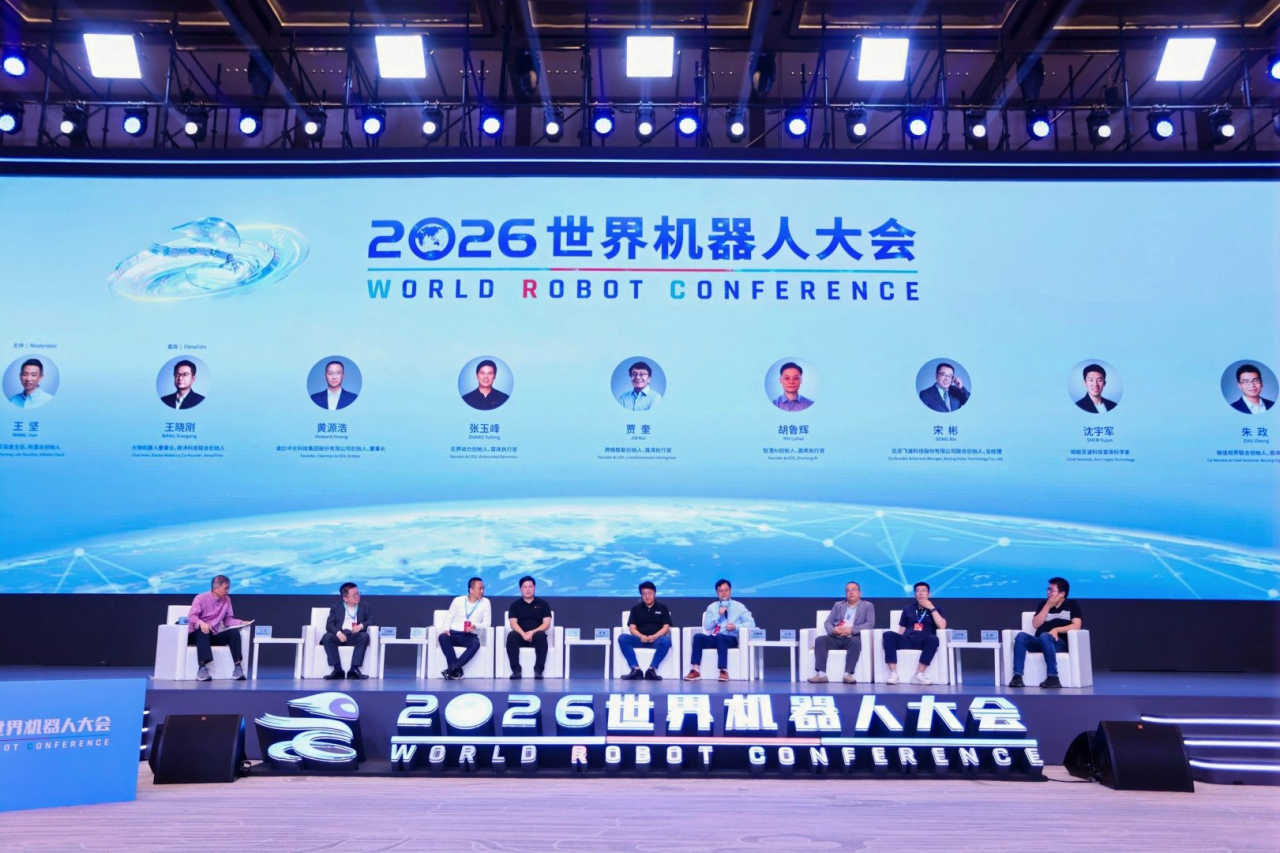
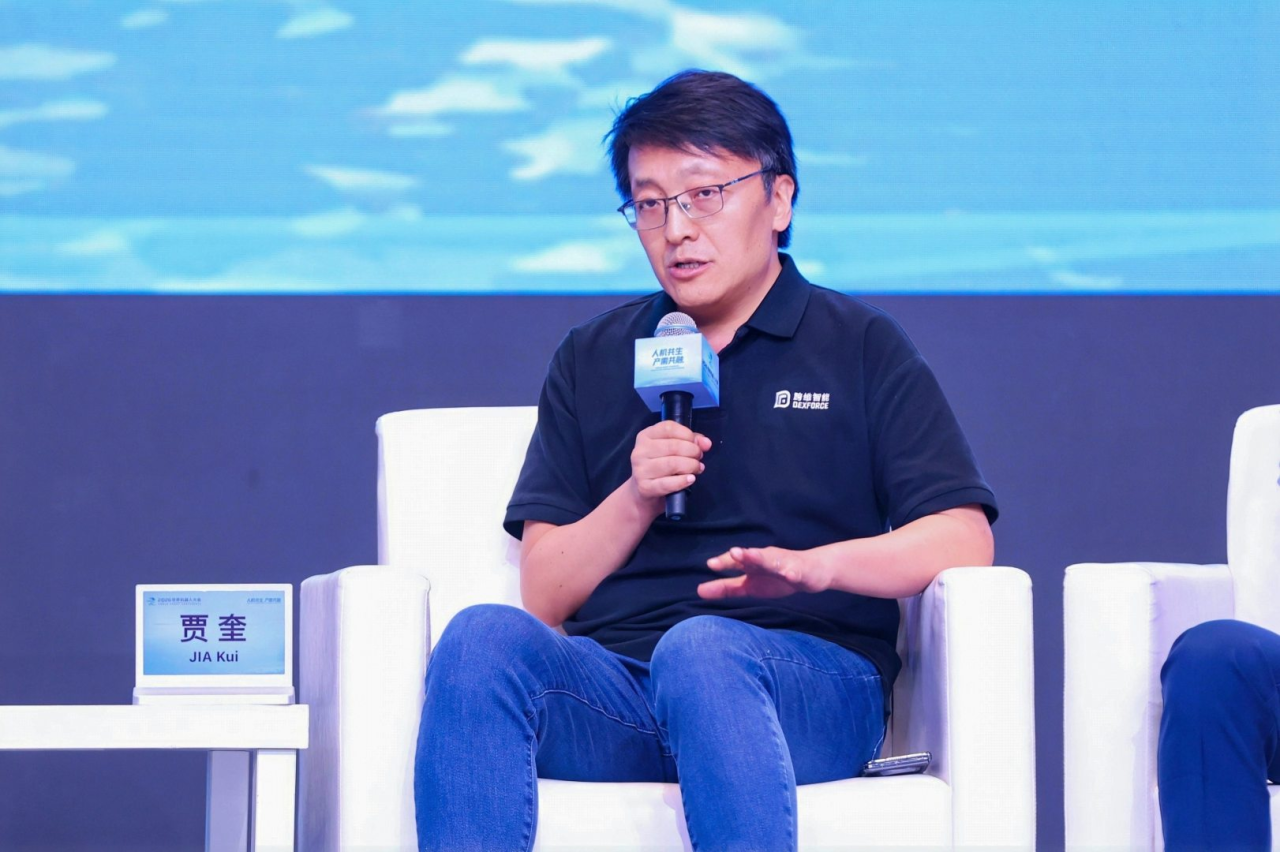
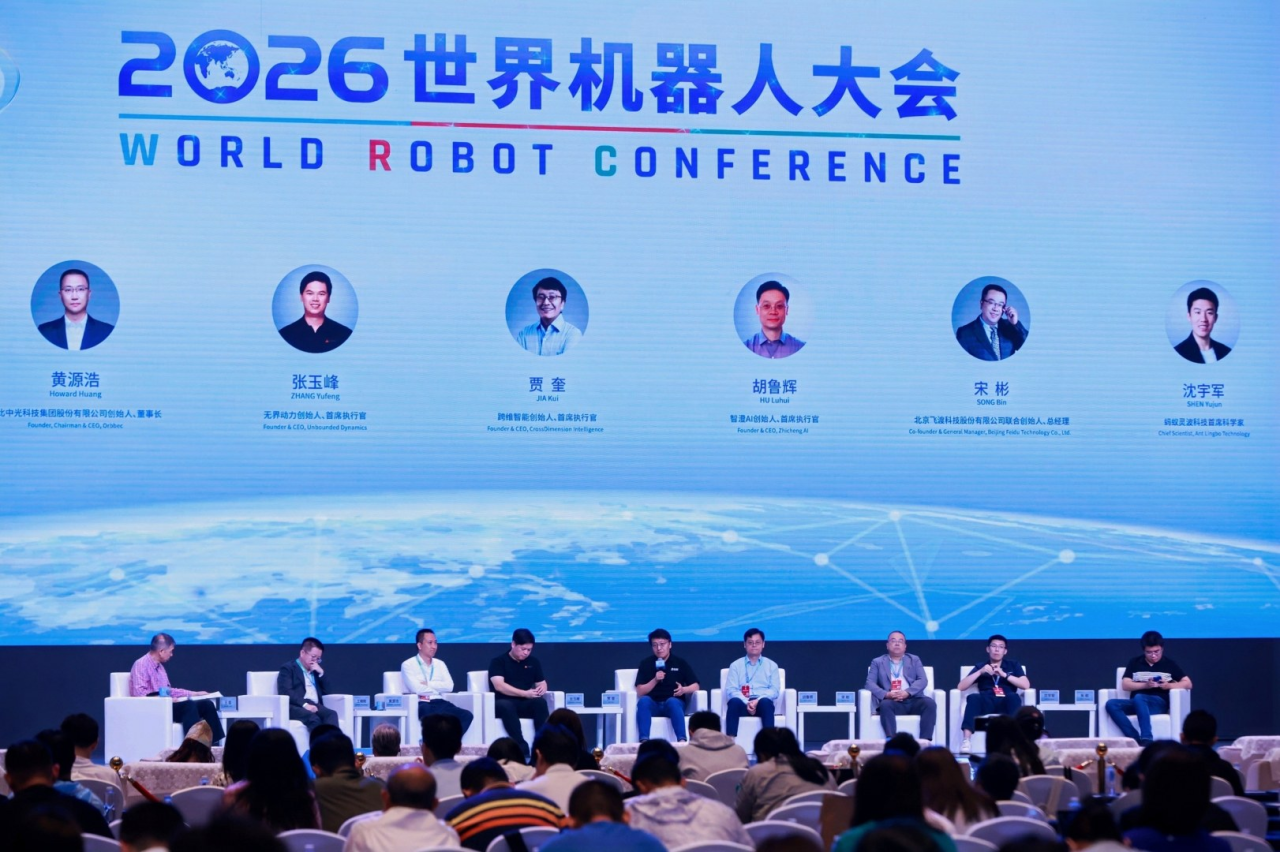
During the conference, Prof. Kui Jia also joined the main-forum dialogue “the Real Distance from World Models to Serving Humanity”. Moderated by Academician Wang Jian, the session brought Prof. Jia together with members of the CIE World Model Expert Committee to explore the core capabilities, data costs, and real-world applications of world models, and shared his thinking on Physical Token Economics, resonating strongly with Academician Wang Jian and the audience on site.
Wang Jian:The term world model has been quite popular in recent years. Could you talk about how the world model you recognize differs from other models, and which technical routes out there are especially interesting?
Prof. Kui Jia:This wave of AI enthusiasm has moved from Transformers and large language models to image generation, video generation, and 3D generation, and now to the world models we discuss today. It is fair to say that the world model represents a culminating high point in the development of generative AI over the past six or seven years.
Whether from the angle of state prediction or content generation, what a world model pursues is generating a world that is accurate and complete in 3D geometry and physical laws. In this sense, the world model is the crown jewel of generative AI.
Broadly speaking, video generation, 3D generation, and the modeling of the geometric and physical world can all be brought under the umbrella of world models. But what DexForce Technology cares about more is: can the world model generate an environment that is geometrically correct in 3D, consistent with the laws of physics, and dynamic and interactive.
To achieve this, the latent space and tokens of the world model must rest on correct spatiotemporal footing. It must not only generate reasonable motion trajectories for the robot end-effector to complete tasks, but also predict how the environment will dynamically change after a robot or other physical agent interacts with it.
Therefore, compared with large language models or VLAs, the world model has a higher capability ceiling, yet also demands more in data scale and quality. We look forward to the world model achieving greater breakthroughs in the next five to ten years.
Wang Jian:What core capabilities should a world model that can truly serve humanity possess? And what is the biggest gap at present?
Prof. Kui Jia:To discuss how world models can serve humanity, we must first look at what humans truly need. In summary, human needs mainly come in two aspects: one is gaining emotional value, with quality content to experience; the other is being freed from labor, hoping that robots can truly help people get work done.
These also correspond to the two long-standing research mainlines of artificial intelligence: one is perception and understanding, the other is reconstruction and generation. If a unified world model can be formed in the future, it can generate a world that is accurate in 3D geometry and physical laws. Projecting this world onto different forms of information yields text, images, video, or 3D content, thereby serving the content creation and spiritual needs of humanity.
On the other hand, we also hope the world model can perceive and understand the real environment and then drive robots and other physical agents to act. Whether it is freeing people from repetitive labor in factories, or entering homes, understanding human intent, and judging how different tasks should be handled so as to truly help people in the end — all of this needs the support of the world model.
We therefore regard the world model as an end-state form of AI moving toward grand unification: it can perceive, understand, and generate a world consistent with the laws of physics, and it can drive agents to complete tasks in that world. The biggest gap at present lies precisely in the fact that these two kinds of capabilities have not yet been truly unified — the model must not only generate content, but also accurately understand the 3D physical world, predict the changes brought by interaction, and convert such understanding into reliable action. From the perspective of scientific research, this may also be a long-term proposition that artificial intelligence, machine learning, and even statistics will jointly face for at least the next ten years.
Wang Jian:Could data become an insurmountable cost barrier for innovative companies? Is there an opportunity for everyone to work together and get data right? I would like to hear your suggestions and experience from within this industry.
Prof. Kui Jia:A panelist just mentioned that current AI development still relies heavily on sustained investment in data scale, model parameters, and computing power. But if our goal is general Physical AI or general embodied AI, the industry may still be vastly underestimating how much data “generality” demands.
A very simple example: facing just one or two objects, humans can design nearly endless tasks, and each task in turn calls for different actions. The task space is nearly infinite, so we must find a way of producing data that society as a whole can afford.
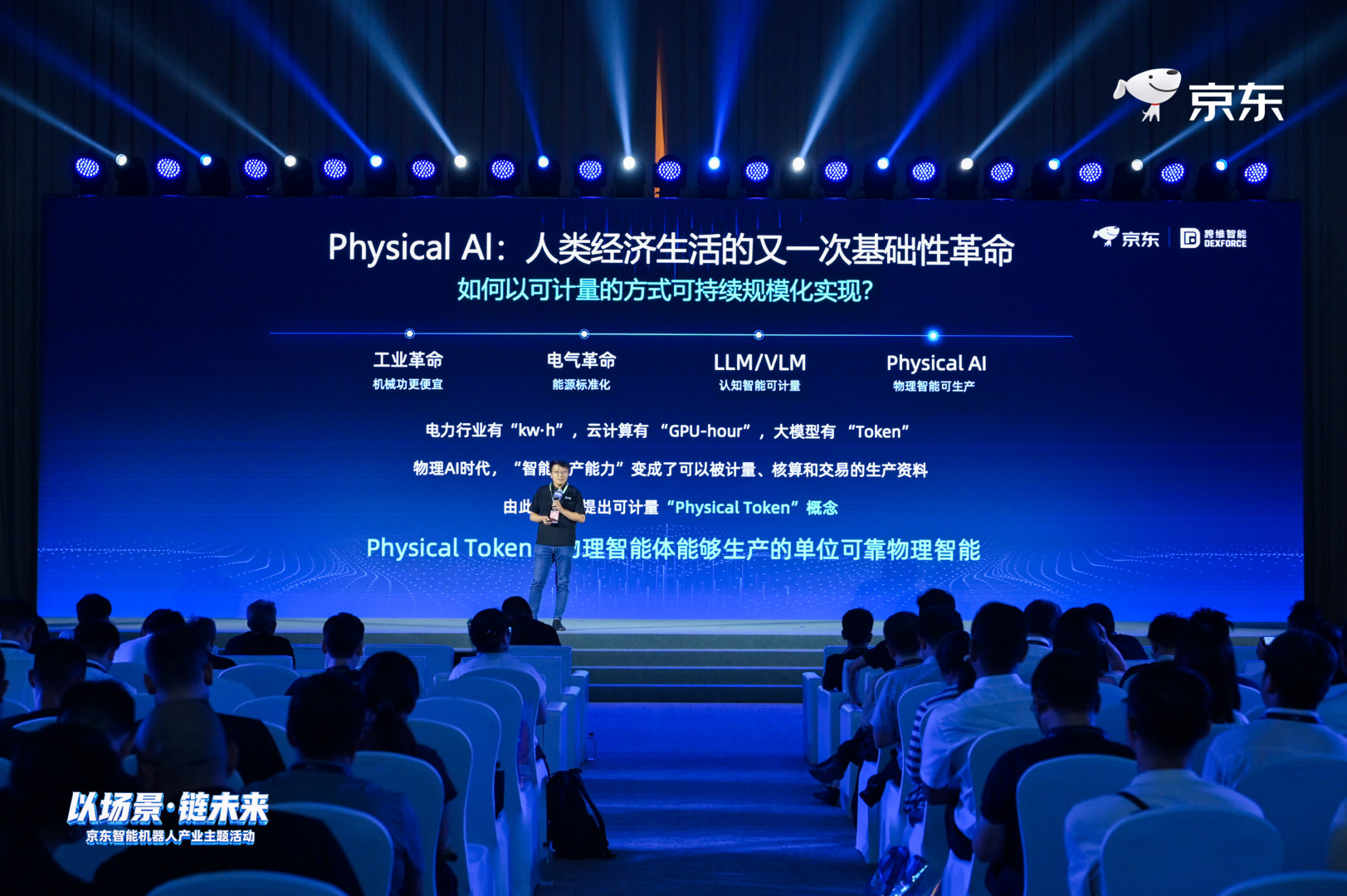
This is why I have recently been promoting thinking on “Physical Token Economics” across the industry. It is not about how much a Physical Token sells for; it is about thinking systematically from the very start: how the data infrastructure should be built, how the model architecture should be designed, and how models, robot embodiments, and application scenarios should work in coordination. If these questions are not thought through early in the industry, general Physical AI may be very hard to truly achieve — and in the end it still comes back to the question of data cost.
In terms of general capability, I believe the generalization ability of a robot is coupled from two parts: one is semantic generalization, the other is physical generalization.
Semantic generalization addresses whether a robot, when facing different objects, can understand what task it should complete and what actions it should take. It essentially comes from human cognition and the behavioral intelligence formed after cognition, so this part of the capability must be learned from real human data. Yet real data must also be acquired in a sufficiently efficient, low-cost way.
Traditional real-robot collection is both expensive and inefficient. Even with first-person collection methods such as Ego-Human and Ego-UMI, one person can usually collect only 500 to 1,000 demonstrations per day. Embodied AI needs to borrow the data paradigms of autonomous driving and large language models: people naturally drive, use phones, type, take photos, and shoot videos every day, continuously producing massive data through ordinary activities. Embodied AI therefore also needs to find a way to acquire human behavior and experience at almost no extra cost and without disturbing work or life — for example, through bare-hand, first-person approaches that let data arise naturally in the course of normal human activity.
But this kind of data mainly helps robots understand “how an action should be performed”; it is not yet enough to guarantee precision and stability of execution. For robots to enter real scenarios and keep working reliably, efficient post-training is also required to solve physical generalization — that is, the robot must still complete tasks stably when the test environment, object states, or physical conditions change.
DexForce Technology has consistently insisted on post-training with synthetic data and generative simulation. Only when a post-trained model can be deployed directly onto robots with high success rates, high precision, and high stability can a company avoid re-collecting large amounts of data on every site. In the end, whether customers are willing to invest in robots depends on the efficiency gains and overall value delivered. If every scenario deployment carries heavy collection and debugging costs, the business case hardly stands.From first principles, we must pursue more efficient ways of producing post-training data, and generative simulation and synthetic data are precisely an important path to solving physical generalization.
We therefore hope to form such a closed loop: acquire human experience at low cost during pre-training to learn semantics and behavior; complete post-training through generative simulation and synthetic data to improve execution precision and stability; and finally have the world model drive robots into different application scenarios, continuously generating and feeding back data in real deployment so that the data flywheel spins as it does in autonomous driving. Only in this way can world-model-driven Physical AI achieve sustainable, large-scale deployment.
Wang Jian:Could each of you sum up in one sentence what you should be doing right now to realize your vision?
Prof. Jia:We hope to work with the industry to bring models into more real application scenarios and truly solve problems for humanity.
Wang Jian:Thank you to every panelist, and thank you all for sharing.
03 Spotlight on the JD.com Industry Forum: Physical Token Economics Maps the Path to Scale
In addition, Prof. Kui Jia was invited to a World Robot Conference sub-forum, the JD.com intelligent robotics industry showcase — “Linking the Future through Scenarios” — where Prof. Jia centered his sharing on Physical Token Economics, elaborating from data production and model training to real deployment on how general Physical AI can lower the marginal cost of new capabilities and move toward application at scale.

During this WRC, the technological thinking of DexForce Technology extended from the World Model Expert Committee to the main forum and industry sub-forums. Around world models and Physical Token Economics, DexForce Technology has always held to one conviction: the value of the world model lies not merely in generating a lifelike world, but in enabling robots to truly understand the world and act upon it.
Facing the end game of general physical intelligence, DexForce Technology will continue to close the full loop of human experience, generative simulation, model training, and real deployment, letting every deployment become the starting point from which the next capability grows, continuously lowering the production cost of physical intelligence, and moving robots from “being able to complete tasks” toward replicable, sustainable application at scale.