Physical AI Leaders Forum. From World Models to Real Deployment
On August 19, during WRC 2026, the “Physical AI Leaders Forum” hosted by DexForce Technology took place in Beijing. The forum featured five keynote speeches and one roundtable discussion.
The keynote speakers — Tao Mei, founder and CEO of HiDream.ai and a foreign fellow of the Canadian Academy of Engineering; Xiaogang Wang, chairman of ACE Robotics and co-founder of SenseTime; Prof. Kui Jia, founder and CEO of DexForce Technology and professor at CUHK-Shenzhen; Hang Su, associate researcher at the Department of Computer Science and Technology of Tsinghua University; and Guiliang Liu, dual-appointed assistant professor at CUHK-Shenzhen and the Shenzhen Loop Area Institute (SLAI) and a scientist at DexForce Technology — shared their research and practice across world models, physical intelligence, scaling pathways, foundation models, and simulation data.
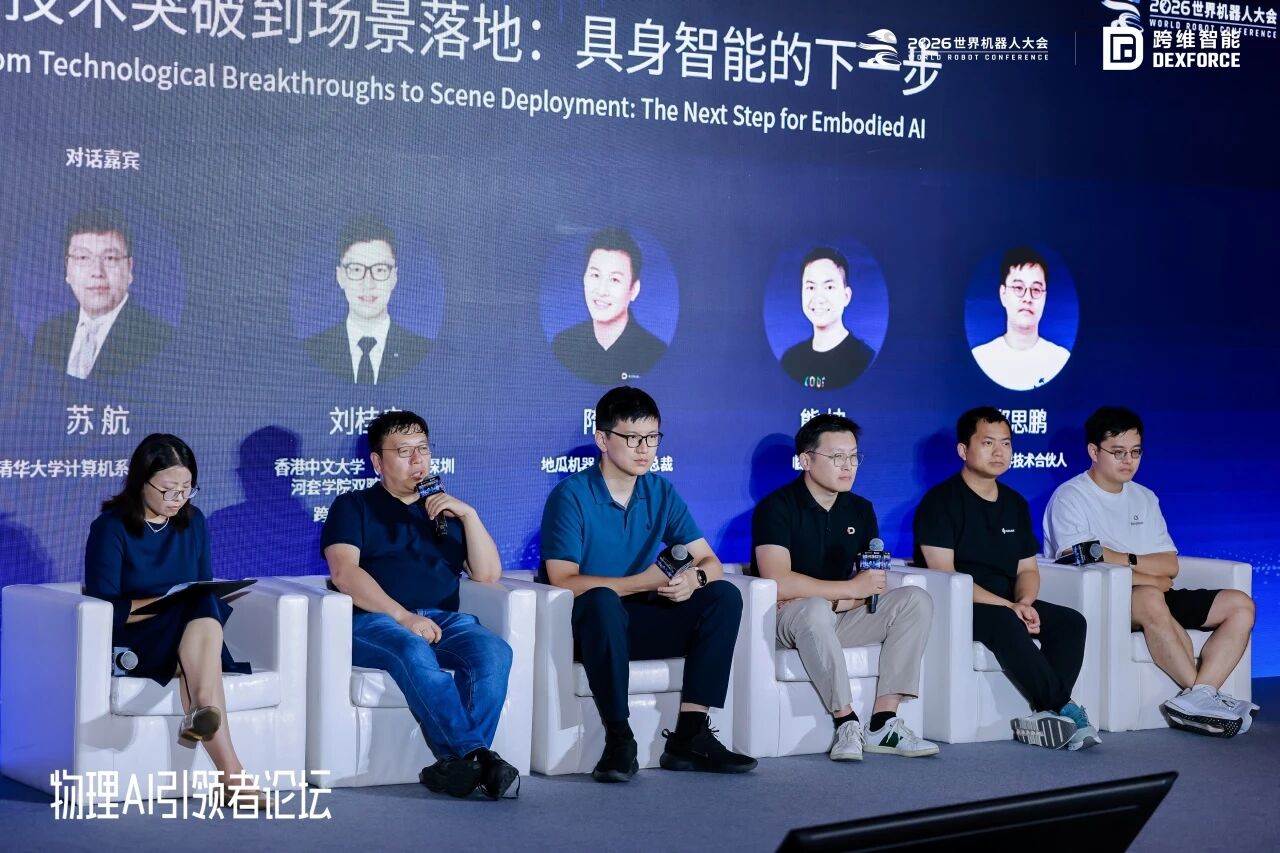
The roundtable was moderated by Lu Ling, deputy editor-in-chief of Caijing magazine and head of its capital and securities section. Hang Su and Guiliang Liu were joined by Sui Wei, vice president of algorithms at D-Robotics; Xiong Kun, CTO of AGILINK; and Zheng Sipeng, technical partner at BeingBeyond, to discuss technical routes, data sources, commercialization, and the “ChatGPT moment” of embodied AI.
The forum drew an on-site audience of more than 200 from academia, industry, investment institutions, and media, while livestreams and related content drew nearly 1 million views. The forum converged on a consensus: Physical AI is not a race among single models, but a systems engineering effort in which data, models, simulation, hardware, and real-world deployment advance in concert.
01 Tao Mei: A Natively All-Modal World Model, from “Simulated World” to “Interactive World”
Tao Mei, founder and CEO of HiDream.ai and a foreign fellow of the Canadian Academy of Engineering, opened from the premise that “a high IQ does not equal the ability to act”: a world model must not only represent the world, but also reason about how states change, understand causality, and ultimately drive agents and embodied robots to take action, closing the loop from cognition to execution.
Around this goal, he focused on a natively all-modal route built on the Unified Transformer (UiT). UiT seeks to represent and align modalities such as text, images, video, 3D, and actions in a unified way at the token level, taking world models beyond content generation toward simulation, understanding, reasoning, and interaction, and giving embodied AI a world-level cognitive foundation that can be used for training and decision-making.
On the capability foundation of embodied AI, Tao Mei condensed the key relationship into one sentence: “The development of world models and embodied AI requires connecting data, world models, agents, and embodied robots.” Here, data builds cognition; the world model understands the state of the world and reasons about physical laws; the agent decides and plans on the basis of predictions; the embodied robot carries out real execution; and feedback from the real environment flows back as new training data. This forms the closed-loop flywheel of “data — cognition — action — feedback”. The world model, Tao Mei said, is precisely the cognitive hub of this flywheel: without a high-quality world model, simulation can hardly approach real physics, and the data flywheel of embodied AI can hardly truly begin to turn.
02 Xiaogang Wang: The “Eureka Moment” of Physical Intelligence
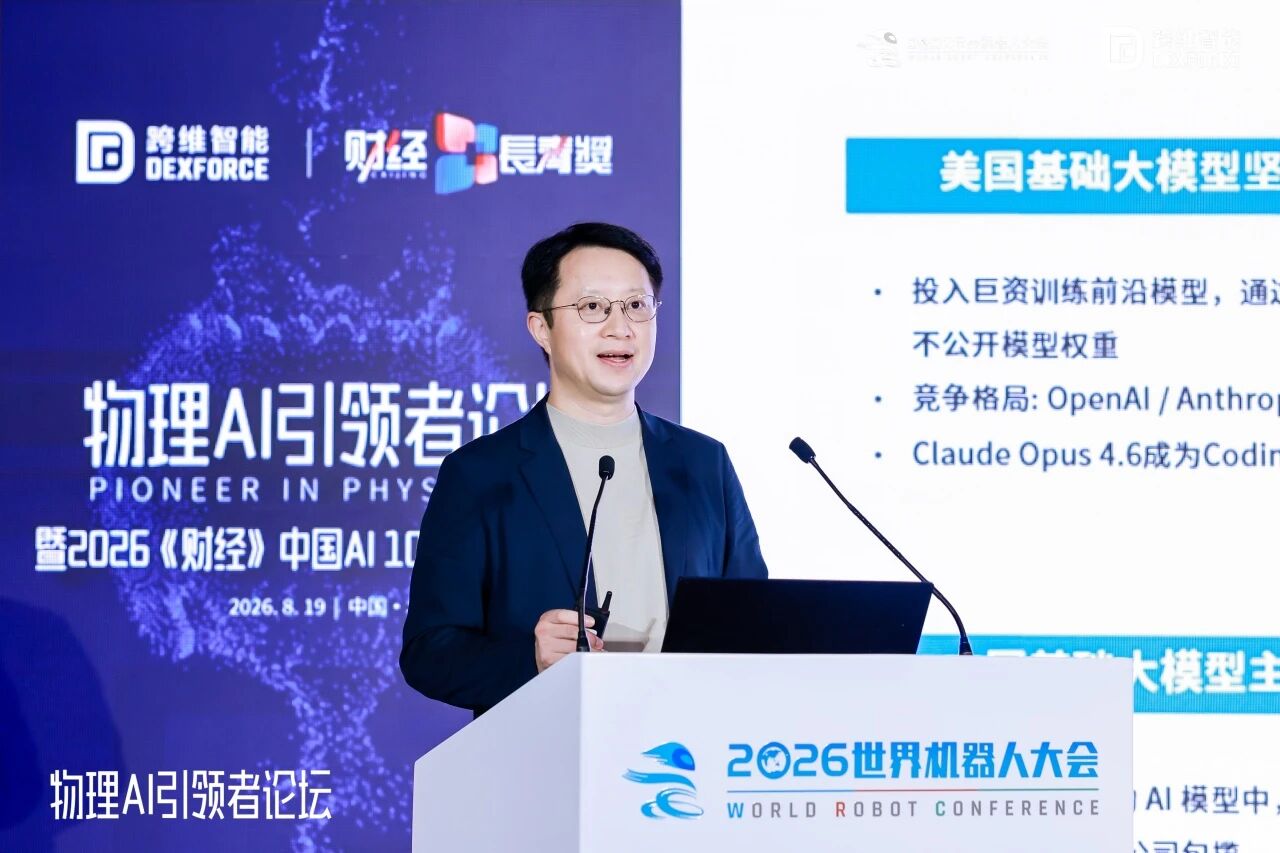
For Xiaogang Wang, chairman of ACE Robotics and co-founder of SenseTime, this “eureka” means pushing models beyond surface phenomena to grasp the underlying physical laws and causal logic, driving embodied AI toward a leap in capability comparable to ChatGPT.
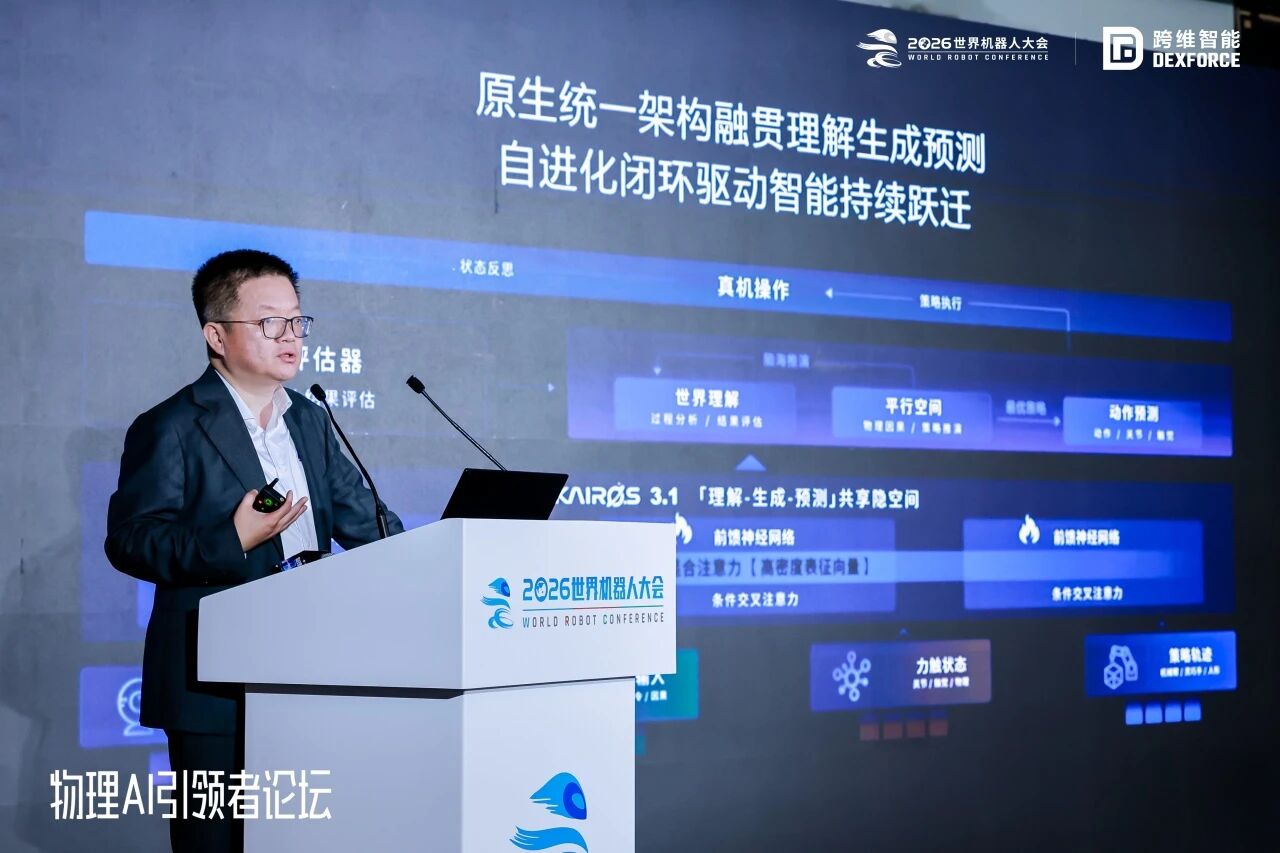
Around this goal, ACE Robotics has proposed a human-centered research paradigm that combines environment-embedded data collection, world models, and generalizable embodied modules. At the model level, an integrated “understanding — generation — prediction” architecture respectively handles task understanding and decomposition, reasoning over action outcomes, and real-robot control.
Xiaogang Wang stressed: “Only when our world models possess all three capabilities at once can robots interact with the physical world in complex and precise ways.” Once the three work in concert, a robot can judge success or failure during execution, detect deviations, and continue the task from its current state instead of starting over after each failure.
03 Prof. Kui Jia: Exploring the Scaling Path of Physical AI through Physical Token Economics
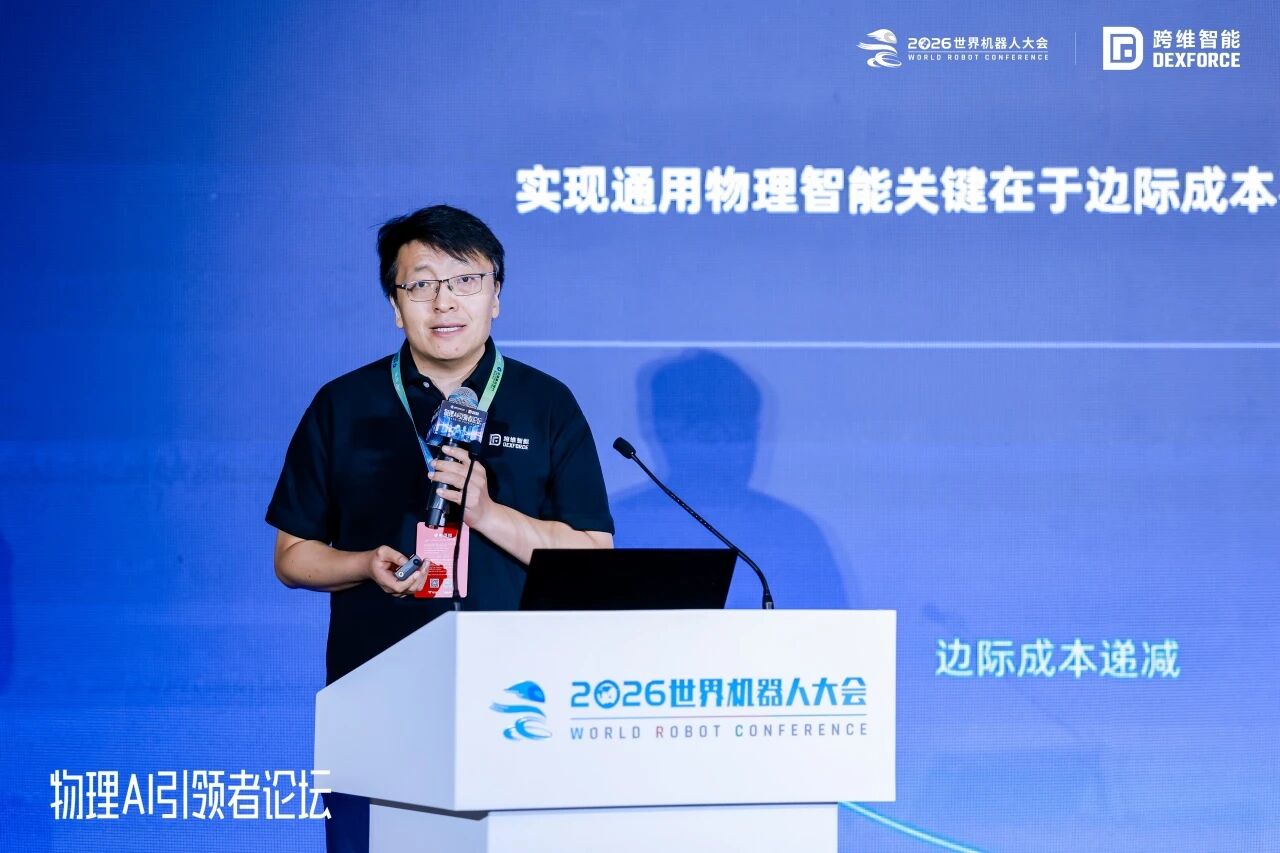
Prof. Kui Jia, founder and CEO of DexForce Technology, spoke on the topic “Physical Token Economics”, re-examining the scaling of Physical AI through the lens of intelligence output and cost. He defined the Physical Token as a “unit of reliable physical intelligence”: not a single piece of data or a single motion, but a reliable, executable, and verifiable task capability formed once labor, data, and computing power have been invested.
Scaling, Prof. Jia pointed out, cannot be judged only by how many skills a robot has mastered; what matters more is the marginal cost of acquiring the next capability. If every new scene or new robot body demands fresh data collection, training, and debugging, then even a rich skill repertoire amounts to project replication. Only when existing experience, models, and deployment feedback serve the next capability, so that each incremental investment keeps falling, can economies of scale take shape — in short, “making the next unit of intelligence cheaper than the last”.
To get there, Prof. Jia proposed four linked stages — human experience, synthetic leverage, capability aggregation, and flywheel expansion: unify data representation so that experience is reused across tasks and robot bodies; amplify real data with generative simulation; form reliable skills through post-training; and channel the failures and long-tail data gathered during deployment back into the model. The four stages close the loop, moving Physical AI from one-off projects toward replicable, sustainable deployment at scale.
04 Guiliang Liu: Can Simulated Synthetic Data Fill the Data Gap of Embodied AI?
Guiliang Liu, dual-appointed assistant professor at CUHK-Shenzhen and the Shenzhen Loop Area Institute (SLAI) and a scientist at DexForce Technology, brought the discussion down to the data supply of embodied AI. Unlike large models, which can mine massive data from the internet, he observed: “In the era of embodied AI, we find that this gold mine does not exist. We have to make the gold ourselves — to create high-quality data.”
Real-robot data involves long production pipelines and heavy manual effort, and struggles to cover the complex variations of objects, tasks, environments, and robot bodies; simulated data offers advantages such as scalability, editability, and automatic annotation.
Guiliang Liu then introduced a synthetic data pipeline composed of generative simulation, skill learning, and data annotation. Taking RoboSynChallenge — the world’s first synthetic-data-driven real-robot challenge, led by the Shenzhen Loop Area Institute (SLAI) and DexForce Technology — as an example, he explored how to generate editable simulation environments from a small amount of real data, automatically expand tasks and trajectories, deploy the trained results to real robots for validation, and use low-cost synthetic experience to cover the long-tail states of the real world.
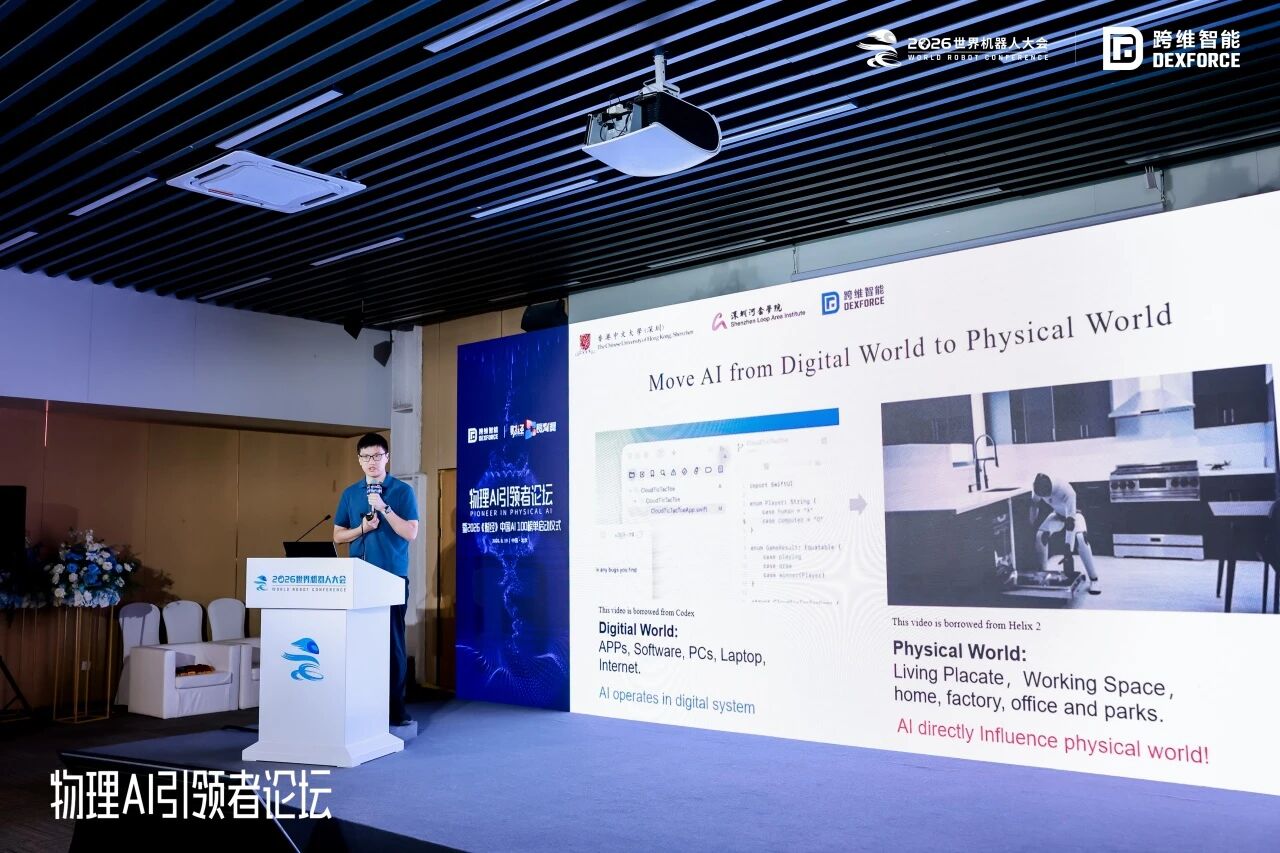
05 Hang Su: From the Digital World to the Physical World, the Key Lies in the Closed Loop
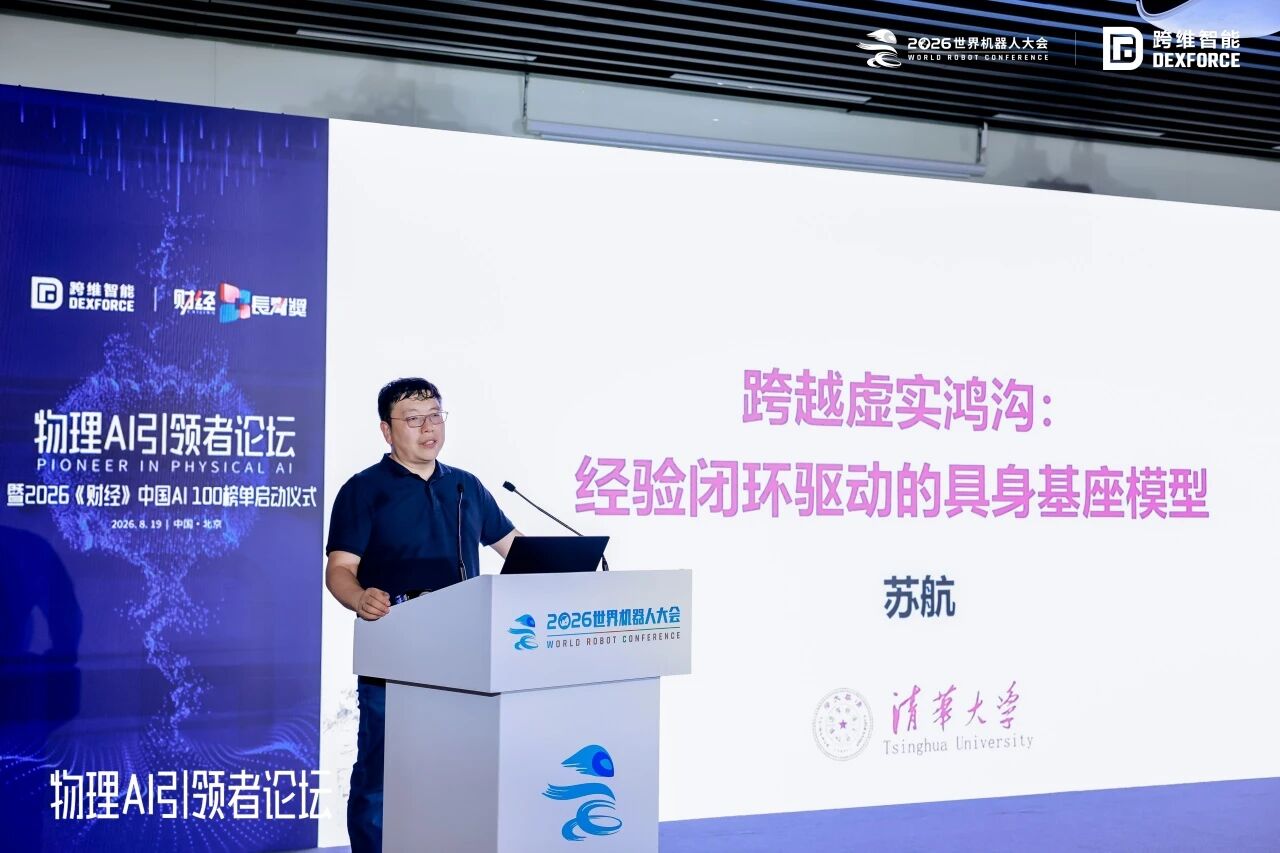
Hang Su, associate researcher at the Department of Computer Science and Technology of Tsinghua University, discussed how foundation models can move from the digital world into real physical environments. Agents in the physical world, he noted, must not only understand semantics but also face perception errors, action deviations, changing contacts, and dynamic environments; model capabilities must ultimately be tested and corrected in real interaction.
Data for embodied AI therefore cannot pursue volume alone — it demands quality, diversity, and a feedback loop. The outcome feedback, failure trajectories, and human takeovers produced during robot execution are all important signals for continued learning. Intermediate states that come close to failure yet remain recoverable are especially valuable, helping the model understand when errors are likely and how to recover from deviations.
As Hang Su put it: “Whether we can build a high-quality real-world data loop, and keep models learning continuously from interaction outcomes, will be a crucial foundation for embodied AI moving from “completing tasks” to “adapting to environments”.”
06 Roundtable: From Technical Breakthroughs to Real-World Deployment, the Next Step for Embodied AI
1. Will technical routes converge?
“VLA and world models are not an either-or choice.” Hang Su argued that VLA excels at building mappings among perception, language, and action, while world models focus more on environmental changes and action outcomes; the two are more likely to fuse across different time scales in the future.
Zheng Sipeng cautioned that a plausible-looking frame does not guarantee accurate 3D relationships, and there is no simple verdict between explicit and implicit world models. From the simulation route, Guiliang Liu added that facing the bottleneck of data scale, synthesis and augmentation will be a stage the industry must go through.
2. Data is a mine — and a ledger
Zheng Sipeng likened human video to “a rich treasure mine”: its scenes, tasks, and trajectories are diverse enough, but only complex data cleaning and refinement can turn it into high-quality data usable for pre-training.
Guiliang Liu emphasized the scalability, editability, and reusability of simulation, while Xiong Kun turned his gaze to the boundaries of training: “A great deal of failure data is the most useful — for the model, and for the effectiveness of subsequent training.”
Sui Wei added: “The efficiency of data usage must be judged by both collection efficiency and training efficiency.” His team’s tests show that generative simulation saves roughly 70%-90% of real data on visual tasks.
The common question across routes is whether newly added data truly converts into capability, rather than merely inflating volume.
3. From demo to mass production, what is hardest?
Sui Wei’s judgment was blunt: “From the lab to final mass production, 80% to 90% of the work along the way is engineering iteration.” Stability in real environments, the return of failure data, and on-device compute all re-examine capabilities proven in the lab.
Hang Su proposed that commercial viability should be judged by whether the adaptation cost for similar scenarios keeps falling after the first deployment; Guiliang Liu judged that relatively controllable environments such as industry are the most likely to scale first.
Xiong Kun stressed that the dexterous hand, as the robot end-effector in most frequent contact with the physical world, must combine quality, stability, and tactile capability — none can be missing.
4. How far away is the “ChatGPT moment”?
The panelists gave no unified timetable.
Hang Su read it as a marked leap in generalization: when facing new environments, new objects, and new tasks, a robot can reuse its existing capabilities instead of collecting data and training from scratch. Guiliang Liu and Sui Wei believed the inflection point depends on when data production and pre-training paradigms converge; Xiong Kun reminded the audience that hardware and tactile capability equally cap the system; Zheng Sipeng characterized this systems engineering effort with the “wooden bucket effect” — foundation models, simulation, post-training, on-device deployment, and hardware must all mature together.
Behind the differing answers, the roundtable reached a consensus: the inflection point of embodied AI will not be defined by any single technology; it will come only when data, models, hardware, and engineering capability together cross the thresholds of reliability and cost.
The forum did not map out a single direction, yet it made the path of Physical AI clearer: real data, generative simulation, model training, and deployment feedback are gradually forming a closed loop. The competition ahead is not just a contest of single-point capabilities, but of who can keep this loop running — producing and replicating reliable physical intelligence at ever-lower cost.